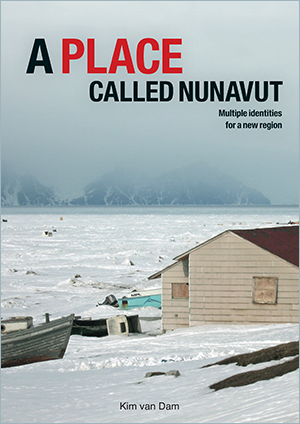
In 1999, Nunavut Territory was created in the Canadian Arctic. The area is about 50 times as large as the Netherlands, and is inhabited by a population of 30,000. 85% of the population is Inuit, the indigenous people in this area. The central questions in this research project are what place or regional identities are being ascribed to Nunavut by different groups of people from within and from outside the region, and how do these identities work? In the process of the formation of the region, the territorial Government of Nunavut is an important actor in producing a regional identity that is based on the cultural identity of the Inuit: the Inuit Homeland. This ‘official’ regional identity creates a symbolic unity that is important in linking people to the region, and through which the land, the history and the people are united in a new territorial membership. However, there is no reason to assume that there is only one regional identity for Nunavut. Different individuals or groups of people from within and from outside the region, such as the people who live in one of the 25 communities and those who work for the multinational mining corporations or as tourist operators, are also involved in the production and reproduction of identities for Nunavut. They represent Nunavut for example as a place to live, a resource region, a wilderness or as a sustainable place. Nunavut Government also links these alternative identities to the area, because as a government they are not only interested in protecting Inuit culture but also aim to modernize the economy in order to enhance prosperity and well-being. As such the place identities are hybrid, and identities that before were produced only by external actors are now also being produced by internal actors, and vice versa.
List of Figures X
List of Tables XI
List of Photo’s XII
List of Abbreviations XII
Acknowledgements XIII
1 Introduction 1
2 Shaping Nunavut: the Formation of a Region 11
3 About Place and Identity 29
4 Methods and Techniques 49
5 The Inuit Homeland 63
6 Our Place to Live: Community, Land, Territory 123
7 The Pristine Wilderness 165
8 A Resource Region 211
9 A Sustainable Place 247
10 Conclusion 289
References 303
Nederlandse samenvatting 317
Een plaats genaamd Nunavut
De verschillende identiteiten van een nieuwe regio 317
Nunavut: het Inuit Thuisland 318
Nunavut: Ons Land, Ons Thuis, Ons Territorium 319
Nunavut: de Ongerepte Wildernis 320
Nunavut het Wingewest 321
Nunavut de Duurzame Plaats 322
Conclusie 323
Appendices 325
Appendix 1: List of Interviewees 325
Appendix 2: Hansard: groups and categories 327
Appendix 3: Time zone changes in Nunavut 328
Appendix 4: Photo experiment 329
Appendix 5: Tourism publications 331
Appendix 6: Companies involved in mining (as of July 19, 2007) 333
Appendix 7: Communities of Nunavut 335