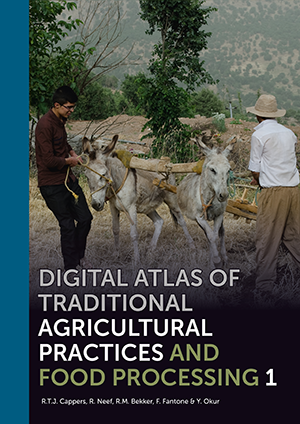
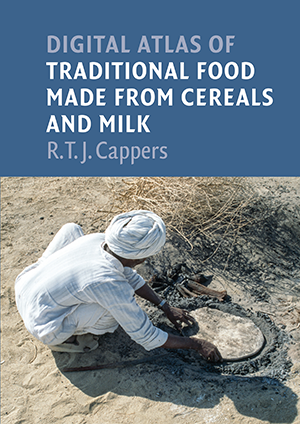
The author has sampled traditional foods throughout south-west Asia, sometimes in large cities but more often in small villages or even remote farmhouses. His research shows that traditions can persist over a long period, but the rarity of some of the items he was able to collect also indicates that these foods represent an endangered mirror of our remote past.
In the first part of the atlas, the author explores the basic principles of the processes applied to cereals and milk. What kinds of traditional foods can be considered representative of an ancient and unique traditional cuisine? Which technologies are necessary for their production? And how might these foods have been made on a large scale and with efficient use of fuel? How were they preserved for long periods?
The atlas portion of the book presents well over 200 samples of traditional foods. Each sample includes a description with high-quality photographs.
Preface 9
1 Introduction 13
2 Processing of cereals and milk 41
3 Examples of traditional foods 75
4 Sequencing traditional foods 93
5 Food and cultural identity 101
ATLAS 105
6 Technology 107
7 Sprouted grain 129
8 Galiyya 133
9 Frikeh 167
10 Bread 203
11 Bulgur 269
12 Pasta 341
13 Couscous 373
14 Kashk 395
15 Qara qurut 451
16 Tarhana 473
Captions to the full-page photos 607
References 611
Glossary 619
Indices 629
Subject index 629
Taxonomic index 636